
Introduction: The Importance of Efficient Dust Collectors in Modern Industry
Walk into a busy plant on a “good” day and you’ll still see it: the fine powder on cable trays, the grit on beams, the mystery fluff collecting where nobody’s eyes go. Dust is patient. It waits for you to get busy… then it starts billing you in downtime, scrap, and safety meetings you never asked for.
Industrial Growth and Air Quality Challenges
Automation didn’t make dust disappear. It often does the opposite—faster cutting, faster conveying, faster grinding, faster dumping—more particles, more often, in more places. You can scale production and still quietly degrade indoor air if capture points, duct velocity, and filter area don’t scale with it.
And those particles aren’t “just annoying.” Small particles (think under 10 microns) can get deep into lungs, and exposure is tied to real health impacts. That’s not drama, that’s physics and biology.
The Role of Dust Collection Systems in Manufacturing Efficiency
Dust collectors are basically the plant’s lungs. When they work, nobody talks about them. When they don’t, everything gets weird: sensors foul, bearings suffer, weld quality goes sideways, housekeeping becomes a full-time job, and compliance starts showing up as overtime.
At the simplest level, industrial dust collection pulls dirty air away from the process, runs it through a filter surface, and sends back cleaner air—while dumping captured solids into a hopper or bin. In real life, the “simple” part ends the second your dust is sticky, hot, corrosive, explosive, or all four.
Transition to Technical Exploration
So let’s get specific—how the systems actually move air, what really drives capture and pressure drop, and why the “cheap bag” you found online tends to become the most expensive part in the room.
Understanding Industrial Dust Collection Systems
A. What Is an Industrial Dust Collector?
An industrial dust collector is an engineered filtration system designed to control airborne particulate generated by manufacturing—capturing dust at the source (hoods), transporting it (ductwork), separating it (filter section), and storing it (hopper/discharge).
The difference between “commercial” and “industrial” isn’t just size. It’s duty cycle, dust loading, temperature, chemical exposure, and whether your operation keeps running while the collector cleans itself. The U.S. EPA’s write-ups on fabric filters (baghouses) frame this clearly: baghouses are used for serious particulate control, and the dust cake that forms on the filter is a big part of why collection can exceed 99%.
B. Core Components and Their Functions
Here’s the anatomy, without the brochure voice:
- Inlet ducting: routes dust-laden air to the collector. Bad ducting design = settling, plugging, and “why is that elbow wearing through?”
- Filtration chamber: the main body where separation happens (bags, cartridges, or panels).
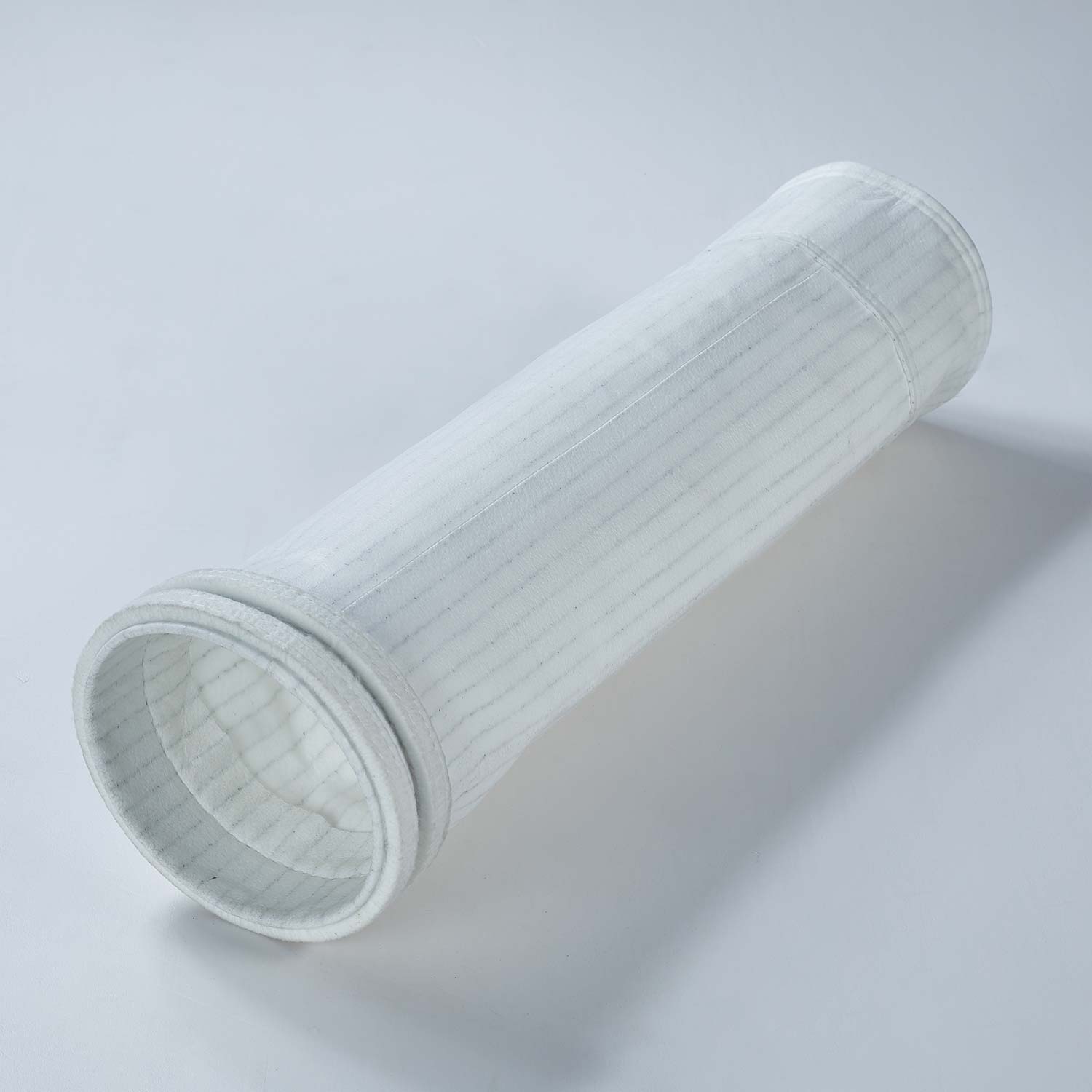
- Filter bags or cartridges: the working surface. Media choice decides temperature limits, chemical resistance, cleanability, and lifespan.
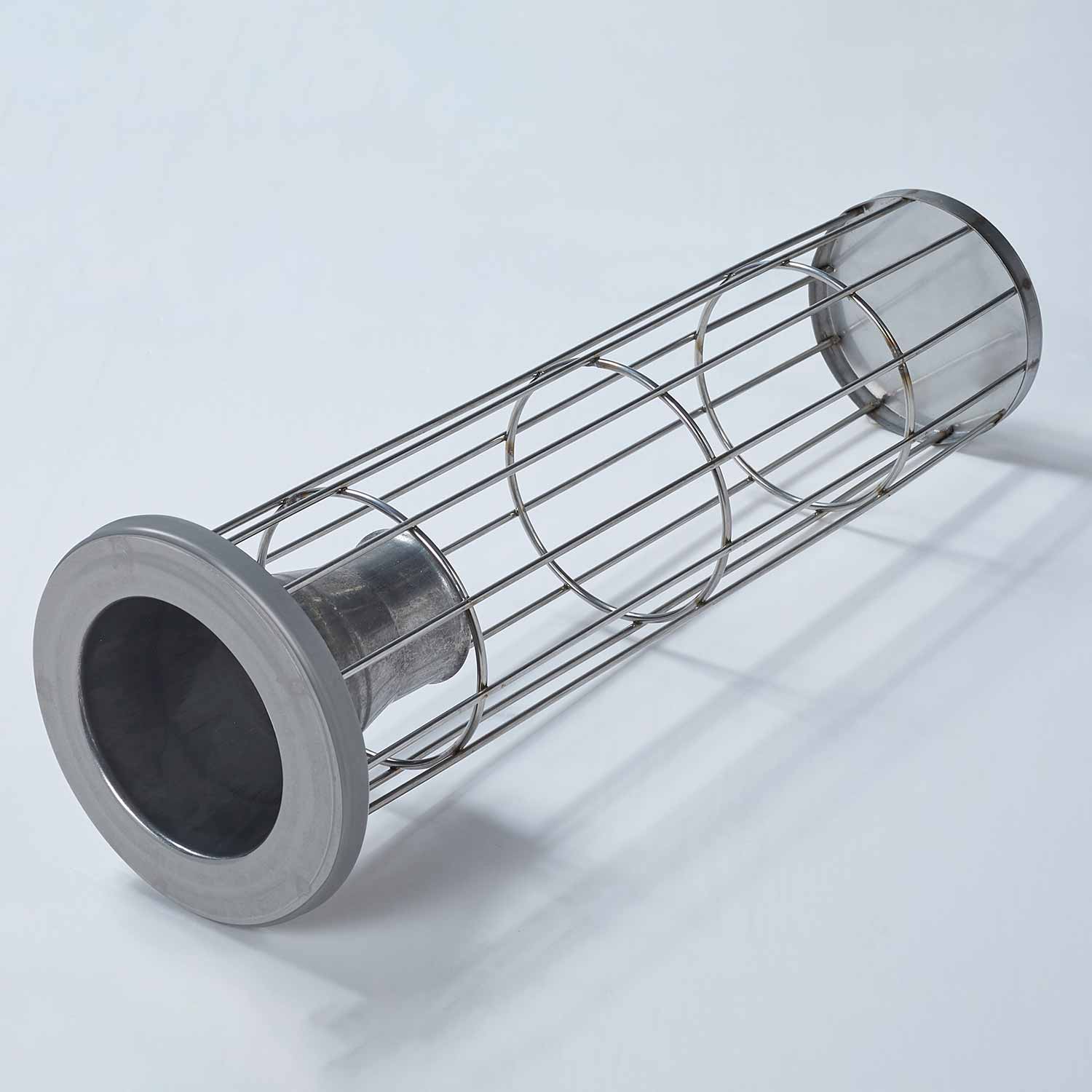
- Cages and frames: if you run bags, the cage keeps a bag from collapsing and controls how it flexes under cleaning pulses. EPA explicitly calls out cages as internal retainers in pulse-jet baghouses.
- Cleaning system and discharge: pulse valves/compressed air (pulse-jet), shaker mechanisms, or reverse-air systems—plus hopper, rotary valve, screw conveyor, or drum.
C. Basic Working Principle
A dust collector is a controlled pressure-and-velocity game:
- Fan creates negative pressure at the pickup point (hood).
- Dust-laden air enters the collector and spreads across filter surfaces (ideally evenly—“ideally” doing a lot of work there).
- Particles get captured by the media and, more importantly, by the dust cake that builds on it.
- Clean air exits to a stack or returns indoors (depending on local rules and your risk tolerance).
- Cleaning knocks dust off the filter into a hopper, while filtration keeps going (in pulse-jet systems).
The Science Behind Dust Filtration Efficiency
Airflow, Pressure, and Particle Behavior
Air velocity matters because particles have inertia. Slow the air too much and heavy dust drops out in ducts. Speed it up too much and you sandblast your elbows and hammer your filters. Static pressure is the “cost” of moving air through everything—hoods, duct, filters, and leaks you didn’t know you had.
And particle size is the silent dealbreaker. The smaller the particle, the more likely it stays airborne and travels—straight into filters, lungs, or the corners of your building nobody cleans. The EPA is blunt: particle size is directly tied to health impact, with small particles being a major concern.
Types of Filtration Mechanisms
Most industrial filter media (bags, cartridges) behave like fibrous filters, and the capture mechanisms aren’t mystical. They’re mechanical:
- Inertial impaction: big particles can’t follow the air stream around fibers, so they smack into the media.
- Interception: particles follow the stream but “graze” a fiber and stick.
- Diffusion: very small particles bounce around (Brownian motion) and eventually hit a fiber.
- Electrostatic attraction (sometimes): charged fibers/particles increase capture without jacking up resistance.
Here’s the part people miss: you’re not filtering with “holes.” You’re filtering with a 3D maze of fibers—and then a dust cake that becomes a highly effective filter layer. That’s why baghouses and cartridge collectors can hit very high performance once they’re seasoned, not freshly installed.
Filtration System Types
Pulse jet (pulse-jet baghouse): the workhorse for many heavy industrial processes. Short bursts of compressed air flex the bags and crack off cake. EPA describes pulses on the order of hundredths of a second, with compressed air pressures commonly in the 60–120 psig range.
Shaker: simpler mechanically; you stop airflow or isolate compartments, shake bags, drop cake. EPA lists shaking as one of the common cleaning approaches.
Cartridge systems: pleated media packs (bigger surface area per volume), typically lower airflow capacity than big baghouses—but excellent for many fabrication and process applications. EPA’s cartridge collector fact sheet lays out the basics and notes very high achievable efficiencies in new designs.
Choosing isn’t about “best.” It’s about your dust:
- Hot? acidic? moisture swings?
- Abrasive and sharp, or fluffy and clingy?
- Combustible? (If yes, stop treating this like housekeeping and start treating it like a hazard.) OSHA’s combustible dust guidance is very clear that dust collectors and ducts can be part of the problem if not designed and maintained to prevent leaks and manage explosion hazards.
Enhancing System Reliability with Grey Whale’s Filter Solutions
The Role of Filter Media in System Performance
Your collector’s performance is chained to the media. Period.
Media affects:
- Pressure drop stability (and how hard your fan has to work)
- Cleanability (whether pulse cleaning actually works or just polishes the cake)
- Service life (whether you’re changing bags on schedule or in a panic)
Substandard bags fail in familiar ways: seam blowouts, abrasion holes, chemical brittleness, hydrolysis, blinding from moisture, and the classic “it looks fine” leak that shows up as haze at the stack.
If you want a sober, practical way to select media by temperature, humidity, and dust traits, Grey Whale’s own write-up breaks the decision down by flue gas characteristics, dust properties, and cleaning method. It’s refreshingly grounded.
Grey Whale’s Industrial Filtration Expertise
Grey Whale Technology positions itself as a leading Filter Bag Manufacturer focused on customized dust collector filter bags and accessories, with OEM/ODM support and in-house production capabilities.(needle-punch lines, coating line, sewing capacity, and separate bag-cage production lines).
On the product side, you can get very specific, very fast:
- For corrosive/high-temp nastiness, there’s PTFE needle felt with listed use temperature up to 260°C (and short excursions higher), plus low air permeability typical of tight media. See: Custom PTFE needle Dust filter Bag/Dust Collector Bag.
- For oily or moisture-prone dust, there are water-repellent/oil-proof polyester options with stated post-treatments and typical use temperature ≤130°C. See: Water repellent and oil proof polyester needle filter bag.
- If static is part of your risk profile (powders, organics, certain chemical dusts), anti-static media is on the menu—because sparks plus dust clouds is a bad hobby.
And don’t ignore cages. In pulse-jet collectors, the cage takes beating after beating; bad welds and wrong dimensions show up as premature bag wear. Grey Whale’s cage specs list common material options and geometry ranges (diameter, length, rib count, ring pitch). See: Custom Stainless steel Dust Collector Filter Cage and the silicone-sprayed variant .
If you want the broader catalog to browse by temperature class, start at or jump straight to Room temperature filter bags and High temperature filter bags.
Partnering with Industrial Clients for Optimization
Most “partnership” talk is fluff. Here’s what actually matters in B2B filtration:
- Somebody asks for your dust sample, process temperature profile, dew point risk, and cleaning method.
- Somebody checks your bag dimensions against cage OD, top ring style, and tube sheet details—because “close enough” becomes bypass leakage.
- Somebody talks about air-to-cloth ratio and pressure drop targets like they’ve been burned before (they have).
Grey Whale’s site leans into custom manufacturing and technical selection guidance rather than pretending one fabric solves every plant on Earth. That’s the correct attitude.
Maintaining and Optimizing Industrial Dust Collectors
Routine Maintenance and Inspection
If you want a dust collector to behave, watch the things that drift:
- Differential pressure (ΔP): rising ΔP usually means loading/blinding; weirdly low ΔP can mean a leak, torn bags, or a cleaning system going wild. EPA also lists pressure differential and cleaning mechanism operation as key indicators to monitor for fabric filters.
- Cleaning cycles: pulse timing and compressed air quality matter more than people admit. Wet air kills.
- Scheduled replacements: don’t wait for visible emissions. By the time you can “see” the problem, it’s already been a problem.
Troubleshooting Common System Issues
Low suction at hoods:
- check blast gates and duct plugging
- check fan rotation and belt condition
- check for “helpful” holes someone added in the duct (yes, it happens)
High pressure drop:
- media blinded (moisture + fines + wrong treatment)
- cleaning system underperforming (pulse valve issues, low air pressure, plugged blowpipes)
- dust properties changed (new material, new process, new nightmare)
Uneven air distribution:
- poor inlet design, missing baffles, or dead zones
- misaligned bags/cages causing local loading
EPA’s fabric filter descriptions underline that dust buildup increases pressure drop and cleaning is used to prevent excessive pressure drop—so if ΔP is out of control, the root cause is usually cake management or airflow distribution, not “bad luck.”
The Future of Industrial Dust Collection
The future isn’t shiny screens. It’s boring accountability:
- Smart monitoring: ΔP trend + fan amps + compressed-air pressure + leak detection = early warning instead of surprise shutdowns. EPA explicitly points to bag leak detection and other monitoring approaches for fabric filter performance.
- Materials that resist blinding and chemical attack: not glamorous, just profitable.
- Energy discipline: stable pressure drop reduces fan energy—one of the few “green” wins that also makes your CFO calm down.
Conclusion: Cleaner Air, Smarter Operations
Industrial dust collection isn’t a side project. It’s production insurance.
When you understand how your collector works—airflow, pressure drop, cake, cleaning—you stop treating filter bags like generic consumables and start treating them like a tuned part of the system. And if you need custom media and cages built around your actual conditions (heat, corrosion, sticky dust, static risk), Grey Whale’s filter bags and cage options are built for that kind of reality.
If you want to talk specs instead of slogans, use the contact page.
FAQ:
What are the main components of an industrial dust collection system?
At minimum: hood/capture point, ductwork, fan, collector body, filters (bags or cartridges), cleaning system, and dust discharge/hopper. In pulse-jet baghouses, cages are non-negotiable because they support the bags during cleaning pulses.
How do filter bags and cages affect dust collector performance?
Bags control capture, cleaning behavior, and pressure drop. Cages control bag shape, how the bag snaps during pulsing, and how fast abrasion eats through the fabric. If cages are out of spec (wrong diameter, bad finish, weak welds), bags fail early—usually right where the cage rubs.
Grey Whale’s cage specs (diameter ranges, rib counts, ring pitch, materials) give a sense of what you can tune.
What types of industrial dust collectors are most efficient?
For fine particulate, fabric filters (baghouses) are commonly used because the dust cake becomes a highly effective filter layer, and EPA notes collection efficiencies often exceed 99%.
Cartridge collectors can also reach very high efficiencies in appropriate applications, especially at lower flow rates and with pleated media designs.
How often should industrial dust filters be replaced?
There’s no single interval that isn’t a lie. Replacement depends on temperature, dust abrasiveness, moisture, cleaning intensity, and whether your media matches the job.
A practical rule: replace when you see persistent ΔP drift, cleaning no longer restores ΔP, visible emissions/bag leaks, or physical damage during inspections. And if you’re guessing on media selection, start with Grey Whale’s selection guide—temperature and humidity alone can narrow the field fast.
How can I calculate the airflow (CFM) for a dust collector system?
Two common approaches:
1) Capture-velocity method (at the hood):
- Decide the capture velocity needed for your process (varies by dust behavior and hood design).
- Multiply by hood opening area to estimate required airflow.
- Then add transport velocity needs for ducts (to keep dust suspended) and account for losses.
2) Air-to-cloth method (at the collector):
- Choose an air-to-cloth ratio based on dust loading and cleaning method. EPA describes air-to-cloth ratio as the volumetric airflow divided by cloth area, and notes high dust loading often demands more area to avoid excessive pressure drop.
- Compute:
- CFM ≈ (Air-to-cloth) × (Total cloth area)
This is how you sanity-check whether a proposed baghouse has enough filter area to survive your dust without turning into a plugged brick.
- CFM ≈ (Air-to-cloth) × (Total cloth area)
If you’re matching bags to an existing unit, start with the collector model + bag dimensions, then pick media for your gas temperature/humidity/chemistry. Grey Whale’s product categories make it easier to sort by temperature class.