
Introduction: Clean Air Starts with an Efficient Baghouse System
Picture a cement plant or a metal fabrication shop without filtration. It’s not just dirty—it’s a lawsuit waiting to happen. You have particulate matter coating every surface, machinery grinding to a halt because grit got into the gears, and regulators breathing down your neck. Industrial air pollution isn’t an abstract concept; it’s a very loud, very expensive logistical nightmare.
That’s where the baghouse comes in. It’s not the most glamorous piece of equipment on the lot. It doesn’t make the product. It doesn’t generate revenue directly. But if it fails, everything else stops.
At its simplest, a baghouse is a giant vacuum cleaner for your facility. But unlike the one in your closet, this system has to handle thousands of cubic feet of air per minute, often laden with abrasive, hot, or chemically aggressive dust. For engineers and plant operators, treating the baghouse like a “set it and forget it” box is a rookie mistake. Understanding the mechanics—how the air moves, how the fabric traps particles, and how the cleaning cycle keeps the pressure drop stable—is the difference between a smooth operation and an unplanned shutdown at 2 AM.
What Is a Baghouse and Why It Matters
The Core Function of a Baghouse
Think of a baghouse as a sieve. Its job is binary: separate the solids from the gas. Dirty, dust-laden air is pulled or pushed into the system, forced through fabric filter media, and released as clean air. The dust stays behind. That’s it.
But the scale makes it complicated. In cement production, you’re dealing with fine limestone dust. In power plants, it’s fly ash. Chemical processing plants might be filtering hazardous compounds that can’t touch the atmosphere. If the baghouse isn’t doing its job, that particulate matter ends up in the lungs of your workforce or coating the cars in the parking lot next door.
Key Components of a Baghouse Dust Collector
You can’t troubleshoot a system if you don’t know the anatomy. A standard baghouse consists of four main parts:
- Inlet and outlet ducts: These are the veins. The inlet brings the chaotic, dirty air in, often using a baffle plate to slow the air down so heavy particles drop out naturally. The outlet is where the clean air escapes.
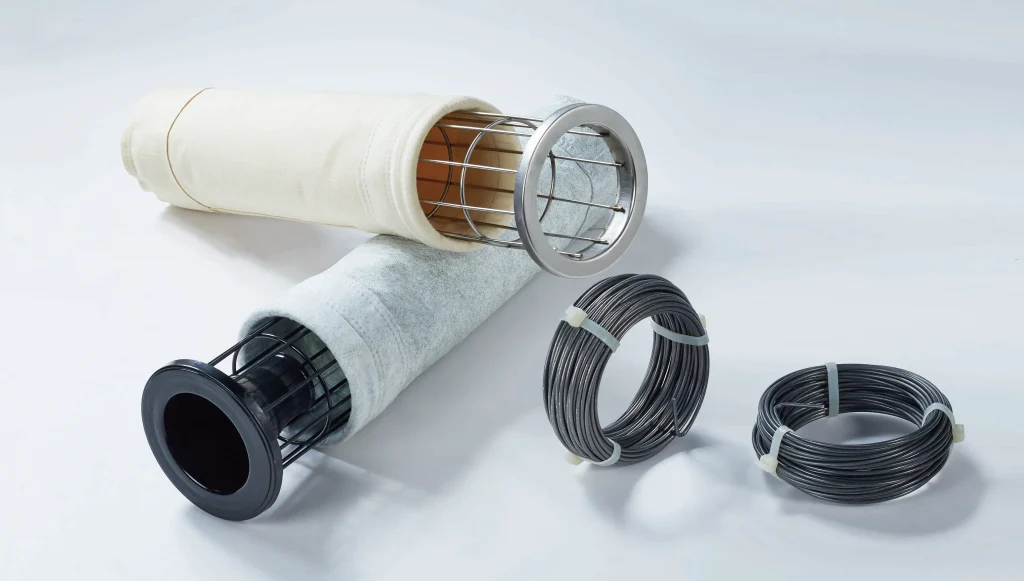
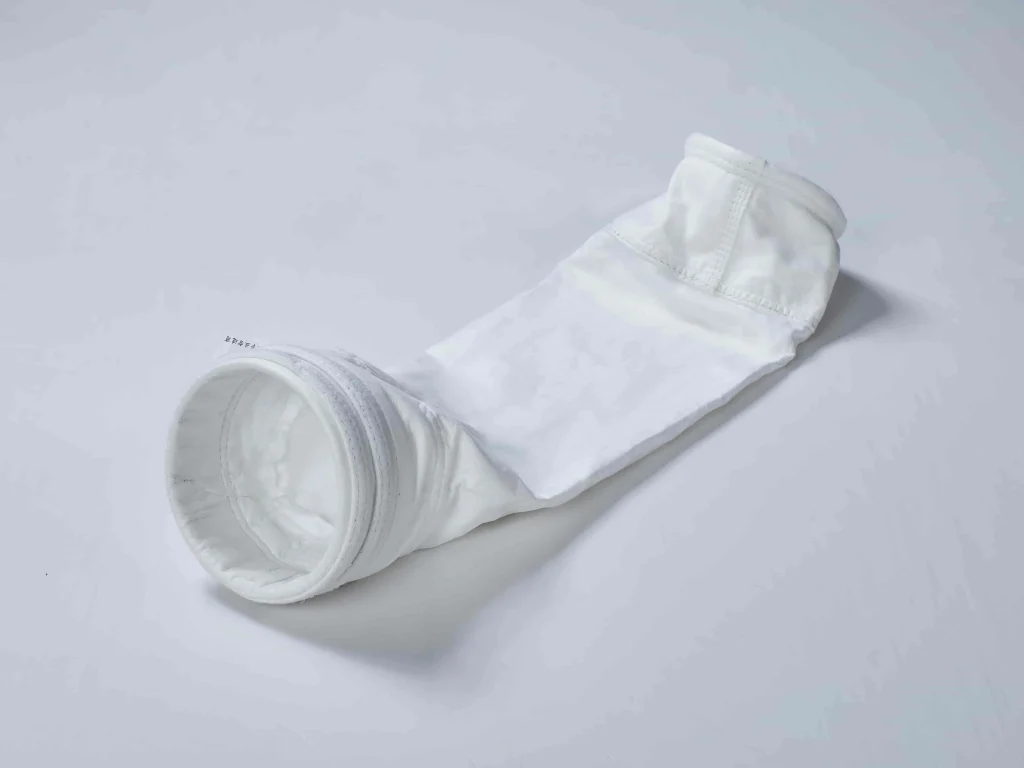
- Filter bags: The star of the show. These are long, cylindrical tubes made of fabric—polyester, fiberglass, PTFE, or other specialized materials. They do the actual catching.
- Cages: Fabric is floppy. Without a skeleton, the bags would collapse under the pressure of the airflow. Cages are metal frames that slide inside the bags to keep them open and rigid.
- Cleaning system: Eventually, the bags get clogged. The cleaning system—whether it uses compressed air blasts or mechanical shaking—knocks the dust off the bags and into a hopper below.
The Physics Behind Filtration
It’s not just about holes in the fabric being smaller than the dust particles. That’s sieve theory, and it only accounts for a fraction of what happens.
Real filtration relies on three mechanisms. First, inertial impaction: heavy particles crash into the fibers because they can’t change direction fast enough. Second, interception: lighter particles graze a fiber and stick to it. Third, diffusion: the tiniest particles bounce around randomly (Brownian motion) until they hit a fiber.
The efficiency of this entire dance depends on two variables: airflow velocity and pressure drop. Push air too fast, and you force particles through the fabric. Let the pressure drop get too high, and the fan can’t pull enough air, choking your production line.
Step-by-Step: How a Baghouse Works
Airflow and Dust Capture Process
Let’s break down the journey of a dust particle. It usually happens in four distinct stages.
Stage 1: Entry. Contaminated air is sucked into the baghouse. It hits a baffle plate or turning vane immediately. This isn’t just to protect the bags from abrasion; it slows the air down. The heaviest particles—the rocks and metal shavings—drop directly into the hopper at the bottom. Gravity does the work for free.
Stage 2: Adhesion. The remaining air, still full of fine dust, travels upward or sideways toward the filter bags. The air passes through the fabric, but the dust gets caught on the surface. Here’s the counterintuitive part: the fabric itself isn’t the best filter. The dust cake is. As dust builds up on the bag, that layer of dust becomes the primary filter, trapping even finer particles. You need a little bit of cake for high efficiency.
Stage 3: Exit. Now scrubbed of particulates, the clean air moves up into the plenum (the clean air side of the collector) and out through the exhaust stack.
Stage 4: Regeneration. The dust cake eventually gets too thick. Airflow suffers. The system senses this pressure differential and triggers a cleaning cycle. Dust is knocked off the bags, falls into the hopper, and is discharged via a rotary valve or screw conveyor.
The Role of Filter Media in Performance
You wouldn’t wear a wool sweater to run a marathon in July. Similarly, you can’t just pick “generic filter bag” for your collector. The media must match the environment.
High temperatures? You need fiberglass or Nomex. Acidic gas stream? You might need a PTFE membrane. Sticky, hygroscopic dust? An oil and water-repellent finish is non-negotiable. The relationship is strict: high fabric permeability allows more air but might bleed dust. Low permeability captures more dust but drives up energy costs. It’s a balancing act involving the “air-to-cloth ratio”—how much air is being forced through each square foot of fabric. Get this ratio wrong, and your bags will blind over in a week.
Types of Baghouse Systems
Not all baghouses clean themselves the same way.
- Pulse-jet baghouse: The industry workhorse. It uses high-pressure blasts of compressed air to “shock” the bags, expanding them rapidly and snapping the dust cake off. It cleans while the system is running, making it ideal for continuous operations.
- Shaker baghouse: Old school. The system shuts down (or isolates a compartment), and a motor physically shakes the bags to dislodge dust. It’s simple but requires downtime.
- Reverse-air baghouse: Instead of a sharp blast, a fan blows air backward through the bags. It’s gentle, which is great for delicate, high-temperature fiberglass bags often found in massive utility boilers.
Building Efficiency and Reliability: Grey Whale’s Custom Filter Solutions
Why Filtration Quality Impacts Baghouse Efficiency:Insights from a Leading Bag Filter Manufacturer
Here is the harsh reality: a baghouse is only as good as the bags inside it. You can have a million-dollar collector structure, but if you install cheap, ill-fitting bags, you’re burning money.
Poor-quality bags lead to two main disasters. First, “bleed-through,” where dust passes right through the media, violating emission limits. Second, “blinding,” where dust gets embedded so deep in the fabric that the cleaning system can’t remove it. Your pressure drop spikes, your fan works harder, and your energy bill skyrockets. Material compatibility is everything here. Using a standard polyester bag in a high-heat chemical application is a guarantee of failure—the bag will degrade, shrink, or dissolve.
Grey Whale’s Industrial-Grade Filter Bags
At Grey Whale, we don’t do “one size fits all.” We know that a cement plant in Nigeria faces different challenges than a woodshop in Canada.
Our Custom Dust Collector Filter Bags are categorized by the reality of your factory floor: Room Temperature, Medium Temperature, and High Temperature. We engineer them for specific chemical and thermal environments. If you’re dealing with abrasive fly ash, we use media designed for durability. If you have fine, sticky particulate, we look at surface treatments that lower pressure loss and extend service life.
And let’s talk about cages. The bag is the skin, but the cage is the bone. Our Precision-fit Filter Cages are engineered to prevent the bag from chafing. If a cage is slightly too small, the bag flaps around and tears. If it’s too big, you can’t get the bag on. Structural stability ensures uniform airflow, which means the dust cake builds evenly and cleans off easily.
Partnering with Industrial Clients for Performance Optimization
We operate with a B2B mindset. We aren’t just shipping you a box of cloth. We want to know your airflow rates, your dust characteristics, and your current pain points.
Take a recent client struggling with short bag life. They were burning through filters every three months. We analyzed the dust—it was chemically aggressive and hotter than their previous supplier accounted for. By switching them to a custom high-temp bag with a PTFE finish, we tripled their service life. That’s not just saving money on bags; that’s saving the labor cost of a change-out and the downtime of the plant.
Maintaining and Monitoring Baghouse Systems
Routine Maintenance Essentials
Maintenance is boring until something breaks. Then it’s a panic. For baghouses, routine inspection is the only way to avoid the panic.
You need to check the bags and cages periodically. Are the cages corroded? Are the bags fraying at the bottom (a sign of inlet abrasion)? But don’t just look at the hardware. Check the diaphragm valves on the pulse-jet system. If those stick, you aren’t cleaning the bags, you’re just making noise. Common signs of wear include a steadily rising pressure drop that doesn’t recover after cleaning, or visible puffs of dust at the exhaust stack—a clear sign a bag has blown out.
Troubleshooting Performance Issues
So, your suction is low. The guys on the floor are complaining. What now?
Start with the fan. Is the belt slipping? Then check the hopper. Is the rotary valve blocked, causing dust to back up into the bags? If the pressure drop is high, you might be cleaning too much or too little. Over-cleaning embeds dust into the fabric; under-cleaning lets the cake get too thick. You have to tune the cleaning timer to match the dust load. It’s an art as much as a science.
Embracing Modern Monitoring Solutions
The days of walking out to the collector to tap a gauge are ending. Smart factories use sensors and IoT (Internet of Things) to track performance in real-time.
Triboelectric sensors can detect minute spikes in particle emissions before they become visible plumes. Differential pressure transmitters send data directly to the control room. This allows for predictive maintenance. Instead of changing bags on a calendar schedule (which is wasteful), you change them based on actual condition data. It improves reliability and keeps the accountants happy.
Conclusion: Efficient Baghouses, Cleaner Operations
Understanding how a baghouse works isn’t academic trivia. It’s the foundation of running a safe, profitable plant. When you know the physics of airflow and the limitations of filter media, you make better decisions. You stop buying the cheapest bags and start buying the right bags.
Grey Whale’s custom-engineered filters are designed to close the gap between “operational” and “efficient.” By combining technical knowledge with high-quality materials, we help industrial facilities maintain compliance and keep the air breathable. It’s about sustainable filtration—reliable, durable, and effective.
FAQ
What is a baghouse and how does it work? A baghouse is an industrial dust collector that uses fabric filter bags to separate dust particles from a gas stream. Dirty air enters, passes through the fabric which traps the dust, and clean air exits.
What are the main components of a baghouse dust collector? The four main components are the inlet/outlet ducts (air transport), filter bags (filtration media), cages (bag support), and the cleaning system (pulse-jet, shaker, or reverse air).
How does air move through a baghouse system? Air enters through the inlet, slows down at a baffle plate where heavy particles drop out, moves through the filter bags where fine dust is trapped, and exits through the clean air plenum and exhaust stack.
How do pulse-jet and shaker baghouses differ? A pulse-jet baghouse cleans bags using blasts of compressed air while the system runs (continuous operation). A shaker baghouse mechanically shakes the bags to remove dust and usually requires the system or compartment to be offline.
What materials are used for baghouse filter bags? Common materials include polyester, polypropylene, fiberglass, aramid (Nomex), and PTFE (Teflon), selected based on the temperature, acidity, and moisture content of the airstream.