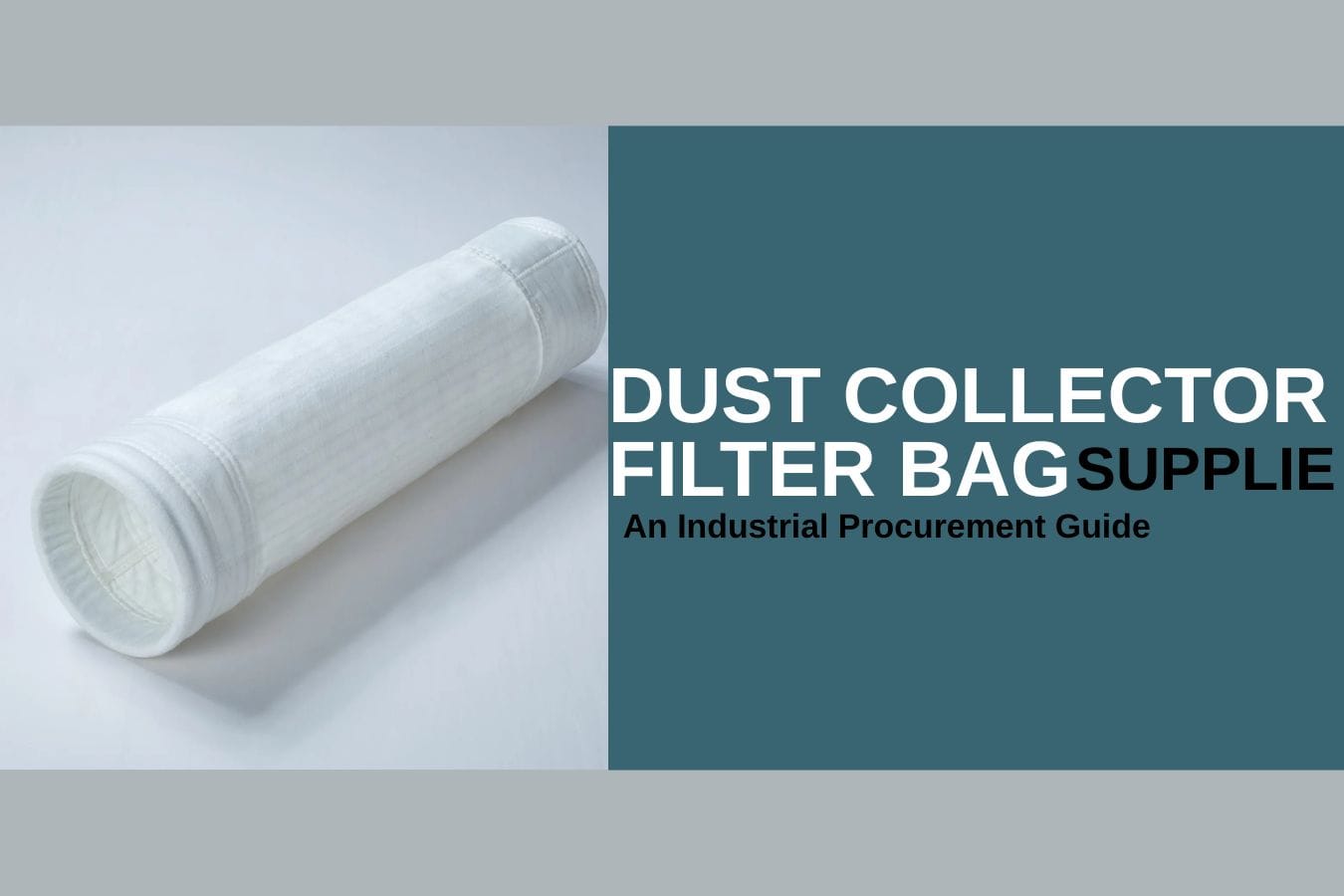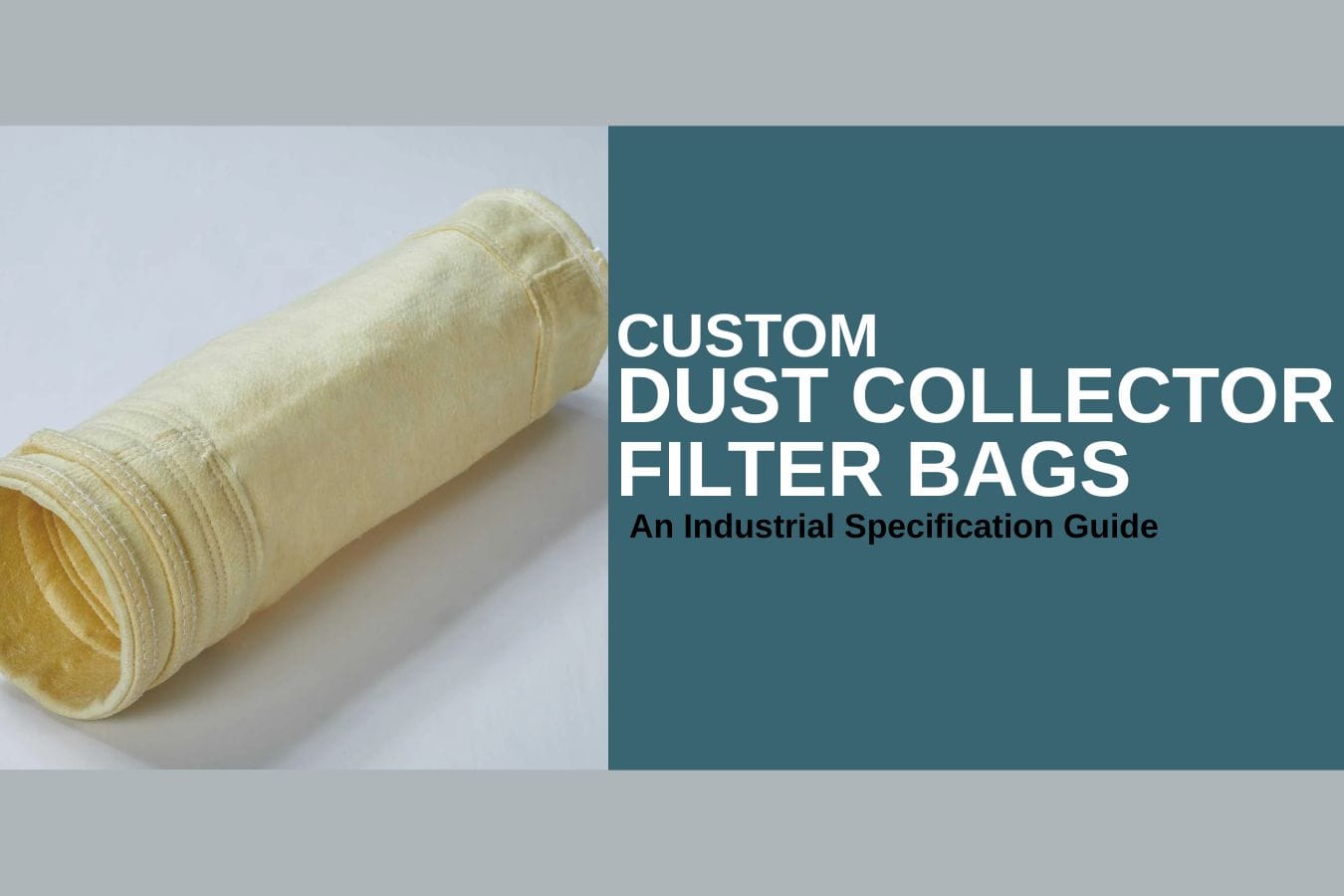
Introduction: The Same Mandate, Even When the Plant Floor Changes (B2B Focus)
Every few years, somebody in a plant meeting “rediscovers” dust collector—usually right after a failed stack test, a cranky neighbor, or a maintenance crew that’s sick of swapping bags like it’s a seasonal hobby.
And sure, dust collection is old. People have been shoving dirty air through barriers forever: gravity drop boxes, crude separators, basic cloth curtains that caught the big junk and let the fines do whatever they wanted. That worked… until it didn’t. Downtime was baked in. So was mediocre capture.
Now the uncomfortable truth: modern fabric filtration doesn’t win because the housing is fancy. It wins because the filter media behaves like a deliberately engineered material system, and because the “supporting cast” (cages, cleaning method, controls) stopped being an afterthought. The EPA’s own write-up on fabric filters makes the point bluntly: high collection efficiency comes largely from the dust cake that builds on the fabric—not the fabric alone—and pressure drop rises as that cake builds, which is why cleaning strategy matters.
As a premier Filter Bag Manufacturer, Grey Whale shows up in this story where it counts: the components people love to under-spec until the problems start—custom filter bags, cages, and the materials know-how behind both. The company’s been building around that premise since it was established in 2015, with in-house needling, coating, and cage production capacity that’s meant to support customization instead of forcing “close enough.”
1: From Basic Cloth to Engineered Fiber – The Revolution of Filter Media
Material science as a performance driver
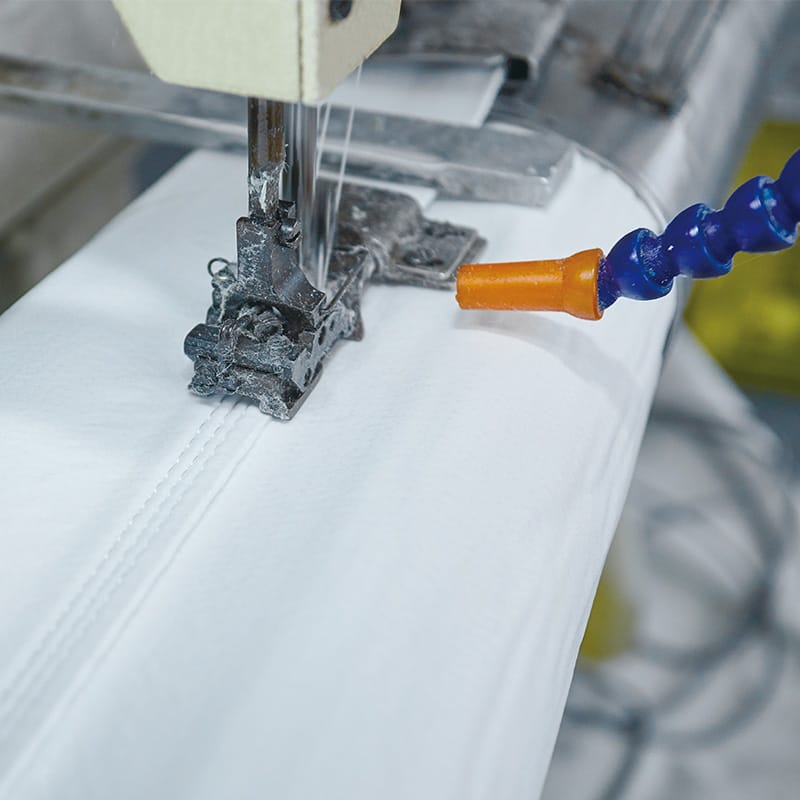
The old world was woven cloth and crossed fingers. The modern world is fibers chosen like you’re building a tool, not buying a commodity.
Start with the obvious upgrade: natural fibers gave way to synthetics because plants don’t run on “nice weather” conditions. Polyester and polypropylene earned their place by being consistent and cheap to run, while acrylic shows up when you need better resistance to certain chemical and hydrolysis conditions than plain polyester likes to tolerate. Grey Whale’s own fiber breakdown is refreshingly direct: low-temperature choices include polyester, polypropylene, acrylic; medium-temp points to PPS; high-temp gets into glass fiber, PTFE, P84, aramid.
Then came needled felt and membrane thinking. Needled felts aren’t about looking pretty—they’re about depth, dust holding, and predictable permeability. Membranes move the fight to the surface, which matters when your dust is sticky, oily, ultrafine, or just plain annoying. Grey Whale’s FAQ spells out the practical difference: film-coated media uses a microporous PTFE membrane for surface filtration, while “ordinary” media relies more on dust-cake/depth behavior. They even call out improved collection efficiency for PM10 and PM2.5 with higher-end film-coated media.
If you want a concrete example of what “engineered” looks like, Grey Whale’s Custom PTFE needle Dust filter Bag/Dust Collector Bag is rated to ≤ 260°C (instant 300°C)—that’s not “pretty warm,” that’s the kind of number you care about in incineration, steel, and ugly flue gas jobs.
And when the job isn’t heat but moisture/oil, that’s a different failure mode: water film, adhesion, hard cleaning, rising resistance. Their Water repellent and oil proof polyester needle filter bag calls this out and lists ≤ 130°C use temperature—exactly the kind of “don’t lie to yourself” limit that keeps buyers from melting money in the name of standardization.
Plus, sometimes your “dust” is also an explosion risk. Grey Whale’s Anti static polyester needle page doesn’t sugarcoat it: at the right concentration, a spark turns into a bad day, and conductive fibers in the felt are part of how you cut that risk.
Thermal and chemical specialization
Temperature and chemistry don’t politely take turns. They stack. Heat accelerates degradation. Acid gases plus a bad temperature profile equals condensation and corrosion. The EPA notes that minimum operating temperature matters when acid gases are present—low temperatures let acids condense, corrode metal parts, and contribute to blinding.
So the “right media” question is really three questions:
- What’s the continuous temp, and what are the spikes?
- What’s in the gas stream (SOx, NOx, HCl/HF, solvents, oils, moisture)?
- Where’s the dew point, and do you cross it during start/stop?
Grey Whale bakes this into how they categorize bags: “normal” (below ~130°C), “medium” (150–180°C), “high” (180–250°C long-term). That’s not marketing taxonomy—it’s shorthand for survivability.
Grey Whale Feature Spot (B2B): thermal load is where cheap bags go to die.
Grey Whale’s product lineup is built around application-specific choices (room temp through high temp, plus specialized chemistries), not a one-size roll of felt. If your process looks like cement, steel, or power—high heat, abrasive dust, constant run hours—then “bag life” is not a feel-good metric. It’s downtime, labor, disposal, fan energy, and the slow creep of differential pressure that quietly eats your throughput. Grey Whale’s custom Dust collector filter bag categories and specific bag builds are designed to match the conditions instead of pretending conditions don’t matter.
2: Beyond the Bag – Getting the Support Structure Right
The evolution of filter cage design
A filter bag doesn’t fail in isolation. It fails because the system bullies it.
Early cages (and, honestly, plenty of modern “budget” cages) have the same sins: corrosion, rough welds, poor straightness, bad fit. The bag rubs, flexes, and abrades until you get pinholes, tears, or collapse during cleaning. And then the plant blames the bag. Of course.
Grey Whale’s Custom Stainless steel Dust Collector Filter Cage page is basically a checklist of what buyers should be specifying: material options (Q235 carbon steel, galvanized, stainless 201/304/316/316L), lengths up to 10 m, rib counts up to 24, ring pitch, and an optional venturi/protective sleeve.
Those details aren’t trivia. They determine how evenly the bag is supported, how it reacts to pulsing, and whether the media dies by a thousand little rub marks.
Compliance and system integration
Pulse-jet cleaning is popular because it keeps units online while cleaning—no “stop the world, shake the bags” downtime. The EPA’s description makes the general point: pressure drop rises with loading, and the system cleans periodically via shaking, reverse air, or pulse jet.
But the cage has to match the cleaning method. If you’re running pulse jet, venturis and fit matter because they shape the cleaning pulse. Micronics describes venturis as cone-shaped devices at the top of a tubular filter bag in pulse-jet collectors, creating negative pressure that pulls additional air into the filter elements during pulsing.
And then there’s compliance-by-design: food, pharma, corrosive processes—anything that punishes carbon steel. Grey Whale’s cage materials list (including 304/316/316L stainless) is the practical answer when corrosion isn’t theoretical.
3: Smart Filtration – Integrating Data and Predictive Maintenance
The rise of IoT in dust collection
Most baghouses aren’t “mysterious.” They’re just ignored.
Differential pressure (ΔP) tells you what’s happening across the filters: loading, cleaning effectiveness, and whether your fan has enough static capability left to keep airflow where it belongs. Donaldson lays out the operational reality: fan selection depends on assumptions about typical differential pressure, and filter change decisions often come when ΔP exceeds what the system can handle—or when cleaning can’t bring ΔP back down.
Now add sensors and trending and you stop guessing. Baghouse.com’s monitoring pitch is straightforward: alerts when ΔP rises, filters clog, or pulse valves fail—before shutdown—so maintenance becomes planned work instead of panic work.
That’s the real shift: not “smart” as a buzzword, but smart as in “we have data, so we quit acting surprised.”
Case study in efficiency gains
Here’s a pattern we’ve seen over and over:
- Plant runs cleaning on a timer because it’s easy.
- Compressed air use creeps up.
- Bags get hammered by over-cleaning.
- ΔP still climbs because the root issue is moisture/chemistry/media mismatch.
- Everybody loses a weekend to emergency changeouts.
Switch the logic: clean on ΔP bands, not on a clock. Baghouse.com makes the point clearly—ΔP-based cleaning avoids wasting compressed air and avoids over-cleaning wear.
Then match media to what’s actually in the stream. If moisture and oil are part of the mess, a water/oil-repellent treatment can reduce the “wet glue” effect that makes dust cling and cleaning less effective. Grey Whale’s water/oil proof polyester bag description is aimed exactly at that scenario.
And if you want the high-efficiency surface-filtration route, Grey Whale’s film-coated media discussion is blunt about why membranes get used: easier dust release, longer service life, lower operating costs, and strong efficiency for PM10/PM2.5-class particles.
Conclusion: The Future of Industrial Air Quality
Industrial filtration used to be treated like a tax. Spend the minimum, curse it later.
That era is over. Material choice (felt, membrane, fiber type), cage design (fit, corrosion resistance, venturi compatibility), and data (ΔP, temperature, moisture trends) decide whether your dust collector is a quiet workhorse or a chronic maintenance liability. The EPA notes fabric filters can hit >99% collection efficiency and that performance is tied to dust cake and cleaning behavior—so the “system” matters, not just the box.
What’s next? More surface-engineered media (nanofiber layers, better membranes), more selective coatings for weird dust, and more plants letting sensors call the shots—because nobody wants to keep paying for compressed air, downtime, and rushed changeouts.
If you’re buying for the next 3–5 years, pick a filtration partner that treats media and cages as engineered parts, not catalog filler. Grey Whale’s bag and cage offerings—and the manufacturing setup behind them—are built around that exact idea.
FAQ
How is predictive maintenance (IoT sensors) changing the standard replacement cycle for dust collector filter bags?
It replaces calendar-based changeouts with condition-based changeouts. ΔP trendlines tell you when filters can’t clean down anymore, or when something else (blinding, valve failure, leaks) is happening. Donaldson describes the practical trigger: when ΔP exceeds what the fan/system can handle and cleaning can’t bring it back down, it’s time.
What are the Total Cost of Ownership (TCO) implications of choosing a custom, application-specific filter bag versus a standard, off-the-shelf option?
TCO is mostly not the purchase price. It’s fan energy (higher ΔP costs money), compressed air for cleaning, labor for changeouts, unplanned downtime, and disposal. Media that resists your actual conditions—heat spikes, moisture, chemistry—reduces premature failure and keeps ΔP behavior stable longer. The EPA notes performance is tied to dust cake and cleaning frequency, and that high temperatures and condensation can damage systems and blind bags.
How do advancements in filter cage design (e.g., venturis, coatings) directly impact the effectiveness and lifespan of pulse-jet cleaning systems?
Venturis shape the pulse. Micronics explains that venturis create negative pressure that pulls additional air into the filter elements during pulsing—so a well-fitted venturi/cage setup improves how the cleaning energy travels down the bag.
Cage coatings/materials are about corrosion and abrasion control. Grey Whale lists cage builds in galvanized and stainless (201/304/316/316L), plus silicone electrostatic spraying options—useful when rust or chemical attack would otherwise chew up cages and, by extension, bags.
What are the current best practices for selecting filter media that can handle both high temperatures and chemically corrosive flue gases simultaneously?
Rule one: don’t ignore dew point/condensation risk. The EPA calls out that low temperatures with acid gases can cause condensation, corrosion, and blinding.
Rule two: choose fibers built for the chemistry and the temperature band. Grey Whale’s own classification is a decent starting map (PPS in the middle band; PTFE, glass fiber, P84, aramid for higher temps), and their PTFE needle felt bag rating (≤260°C, instant 300°C) gives a concrete ceiling for nasty high-temp work.
How can industrial facilities effectively assess the actual filtration efficiency of their dust collection system against specific particle sizes (e.g., $\text{PM}_{2.5}$)?
Two angles:
1) Define the particle class correctly. The EPA defines PM2.5 as fine inhalable particles with diameters generally 2.5 micrometers and smaller.
2) Test media/system performance using recognized methods and monitoring. ISO 11057:2011 is a standard test method for comparative characterization of pulse-jet cleanable filter media, including information about particle emission under standardized conditions (useful for selection and development, not a guarantee of full-scale results).
Then validate in the real world with stack/duct measurements appropriate to your regulatory setup (often done by third-party testing), and use ongoing indicators like ΔP behavior and leak detection to catch degradation before it shows up as visible emissions.