
Most shop managers look at a hazy shop floor, shrug, and decide the solution is a bigger fan. They buy the horsepower, install the beast, and turn it on. The noise is deafening. The energy bill spikes. But three days later, there’s still a fine layer of silica or wood flour coating the rafters.
Why? Because brute force doesn’t move air efficiently. Physics does.
If you don’t have a grip on Cubic Feet per Minute (CFM), you aren’t managing a dust collector system; you’re just making expensive noise. It’s the difference between a surgical vacuum and a leaf blower. One captures the particulate at the source; the other just annoys the neighbors.
This isn’t about buying the most expensive gear off the shelf. It’s about the math.
Understanding CFM and Its Role in Dust Collection
What Is CFM (Cubic Feet per Minute)?
Strip away the engineering jargon for a second. CFM is simply volume over time. It’s the currency of your ventilation system. You have a “budget” of air that your fan can pull, and you have to spend that budget across every machine in your facility.
But volume alone is useless without velocity. Think of a garden hose. The volume (gallons per minute) is the CFM. The speed the water shoots out? That’s FPM (Feet Per Minute). In dust collection, you need enough volume to fill the pipe, but enough velocity to keep the dust moving so it doesn’t settle and clog the ductwork.
Static Pressure (SP) is the tax you pay to move that air. Every foot of pipe, every elbow, and every filter bag creates resistance. Your fan has to overcome this friction (SP) to deliver the required CFM. If you ignore SP, your calculated CFM is fantasy.
Why CFM Is the Foundation of System Design
You can’t just guess here. If your CFM is too low, you get “dropout.” That’s when dust stops floating and piles up inside your horizontal duct runs. Eventually, the pipe collapses under the weight, or worse, it sparks a fire.
On the flip side, if you oversize the system and pull way more CFM than necessary, you create turbulence. This increases abrasion in the pipes—wearing them out from the inside like sandpaper—and pulls good product out of the waste stream. Proper CFM calculation ensures you hit the sweet spot: capturing dust at the hood without sucking up the raw materials or wasting energy.
Common Misconceptions About CFM
The biggest lie in the industry is “more airflow equals better performance.”
False.
More airflow often means higher face velocity at the filters. If you slam dust into a filter bag at 100 mph, it embeds deep into the fabric fibers (blinding the bag) instead of forming a nice, porous cake on the surface. Your expensive filters fail in three months instead of three years.
Another trap? Adding “just one more branch” to an existing trunk line. People think, “It’s just a 4-inch drop, the main fan can take it.” Usually, it can’t. Opening that new gate drops the pressure across the entire system. Suddenly, the machine at the far end of the shop loses suction, and nobody knows why.
The Step-by-Step Process of Calculating Dust Collection CFM
Calculating this correctly feels like homework, but it’s the only way to guarantee the air clears.
Identify Airflow Requirements by Source
Start at the machine, not the fan. Every piece of equipment needs a specific “capture velocity” to grab dust before it escapes into the room.
Heavy, wet sawdust acts differently than welding fumes.
- Light dusts (sanding, welding smoke): You might need a capture velocity of 500–2,000 FPM at the hood face.
- Heavy chips (planers, metal grinding): You’re looking at 4,000–4,500 FPM or higher.
If you don’t calculate the specific requirement for each hood, you’re guessing. A 6-inch port on a planer needs more aggressive pull than a 6-inch port on a fume arm.
Ductwork and Airflow Path Design
Once you know what the machines need, you have to map the road the air travels. This is where most designs fail.
You need to measure the total length of the run, but you also have to count the fittings. A 90-degree elbow isn’t just a turn; aerodynamically, it adds as much resistance as 5 to 10 feet of straight pipe (depending on the radius).
This creates your “friction loss.” You sum up the static pressure drop for every foot of pipe and every bend. If you use corrugated flex hose instead of smooth metal pipe, triple your friction loss numbers. Flex hose is a CFM killer. Use it sparingly.
Total System Airflow Calculation
Now, do the math. Sum up the CFM requirements for every machine you plan to run simultaneously.
Note the word simultaneously. You might have ten machines, but if only three run at once, you don’t need a fan sized for ten. That’s wasted capital. However, you need blast gates to close off the inactive lines.
Once you have the total CFM and the total Static Pressure (SP), you can look at fan curves. If you need 5,000 CFM, but your system has 12 inches of water gauge (SP) resistance, a fan rated for “5,000 CFM @ 6 inches SP” will fail miserably. It will probably only pull 2,500 CFM in reality.
Using Tools and Charts for Accuracy
Don’t be a hero—use the charts. Friction loss charts and air velocity calculators exist for a reason. But treat them as a baseline. Real-world conditions—dents in pipes, leaky flanges, clogged filters—always add drag. A smart engineer adds a safety factor (usually 10-20%) to their calculations to account for the real world being messier than the spreadsheet.
Optimizing Filtration Efficiency: Grey Whale’s Custom Dust Collector Filter Bags
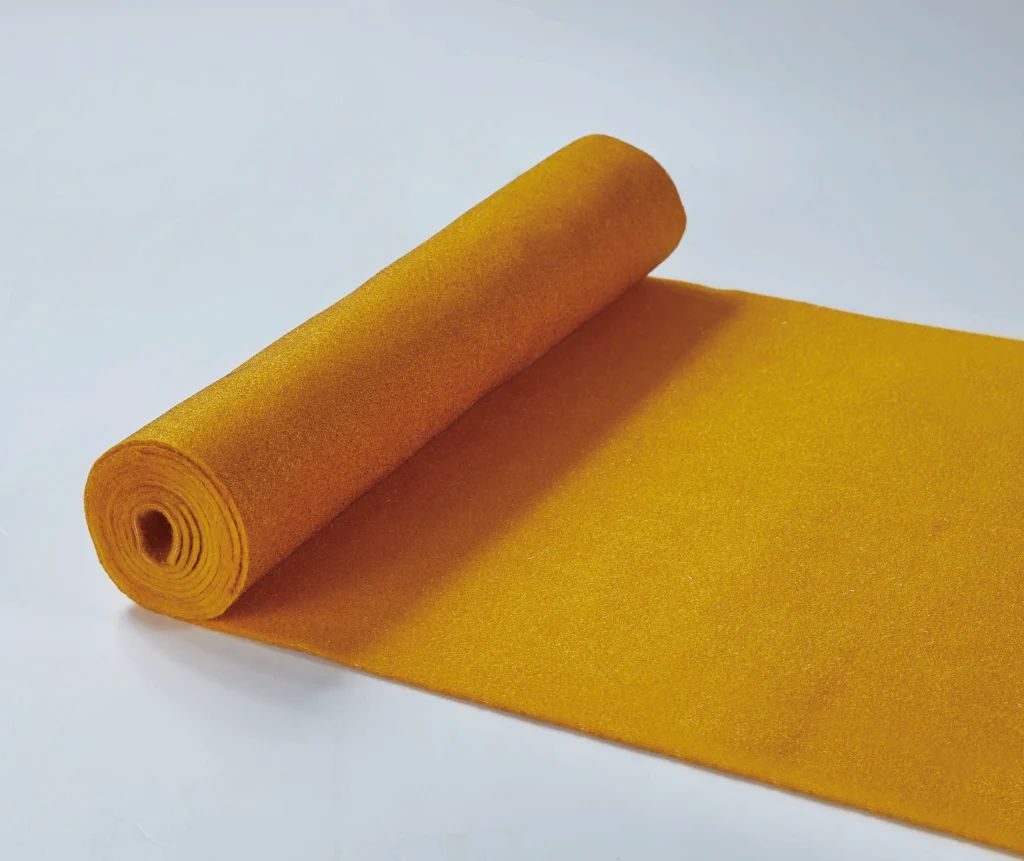
You can have the perfect fan curve and flawless ductwork, but if your filters are garbage, the whole system chokes. The filter is the gatekeeper.
The Impact of Filter Media on Airflow and System Pressure
Think of the filter bag as the final bottleneck. As dust builds up, resistance rises. This is called differential pressure (ΔP). If the filter media is wrong for the application, ΔP spikes immediately.
When ΔP goes up, CFM goes down. It’s a seesaw.
If you use a standard polyester bag in a high-moisture environment, it clogs. The fan screams, trying to pull air through a wall of mud. The result? Zero suction at the machine, regardless of your duct sizing.
Grey Whale’s B2B Filtration Solutions
This is where specialized manufacturing steps in. Grey Whale focuses on the specific chemistry of the application.
- Temperature Matters: You can’t put a standard bag in a cement kiln or an asphalt plant. It will melt or degrade. Grey Whale engineers Custom Dust Collector Filter Bags specifically for High Temperature environments (using materials like Aramid/Nomex or Fiberglass) versus Room Temperature or Medium Temperature applications.
- Structure is Key: Bags don’t stand up on their own. They need a skeleton. Custom Dust Collector Filter Cages are critical here. If the cage corrodes or bends, the bag collapses, blocking airflow. Grey Whale integrates these components so the fit is tight and the airflow remains uniform.
They engineer for “low initial pressure drop.” That means the bag lets air through easily when it’s clean, and sheds dust easily when it pulses, keeping the resistance low over thousands of cycles.
Industrial Applications and Collaboration
This isn’t about selling a generic cloth sack. It’s about matching the media to the dust. Grey Whale partners with heavy industry and OEMs to analyze the dust properties—is it abrasive? Sticky? Explosive?
By tailoring the filter porosity and surface treatment (like PTFE membranes for sticky dust), they ensure the CFM you calculated is the CFM you actually get month after month.

Key Considerations for Maintaining Optimal CFM
Monitoring and Maintenance
The day you install the system is the best it will ever run. From there, it’s a battle against entropy.
You need a Magnehelic gauge (or a digital pressure sensor) on the collector. Watch the trend line. If the pressure drop across the filters stays low, you might have a blown bag (a leak). If it stays high and won’t clean down, your filters are blinded.
Leaks are silent killers of CFM. A loose access door or a worn-out gasket acts like a vacuum leak in a car engine—it kills the vacuum where you actually need it (at the machine).
System Upgrades and Retrofits
Production lines change. You add a new CNC router. You switch from cutting pine to MDF. These changes alter the dust load.
Don’t just slap a new branch on the old system. Re-evaluate. Sometimes, you don’t need a new collector; you just need to upgrade to modern filter media that offers higher permeability, or retrofit the cleaning system to pulse more effectively. Modernizing the filter technology can often “buy back” CFM that was being lost to resistance.
Safety and Compliance
This is where the math gets serious. If your CFM drops, air quality drops. Combustible dust accumulates on overhead beams.
OSHA and the EPA have strict standards. If you aren’t pulling the required volume to keep the concentration of dust below the Permissible Exposure Limit (PEL), you are non-compliant. Consistent CFM monitoring isn’t just about keeping the floor clean; it’s about keeping the building from exploding and the workers from getting sick.
Conclusion: Precision Airflow for Peak Performance
Efficient dust collection isn’t magic. It’s a rigid equation of volume, velocity, and resistance. You have to measure precisely at the source, design the path with minimal friction, and filter the air without choking the flow.
Engineered solutions from professional Dust Collector Cage Manufacturers like Grey Whale—focusing on specific media and cage matching—are the difference between a system that struggles and one that hums.
Don’t guess. Measure the variables, filter intelligently, and maintain the rig. That’s how you keep the air clear and the inspectors off your back.
FAQ
What does CFM mean in a dust collection system? CFM stands for Cubic Feet per Minute. It measures the volume of air being moved. It’s the capacity of your system to evacuate dust-laden air from the workspace.
What factors influence the airflow requirements of a dust collection system? The type of dust (heavy vs. light), the size of the machine port, the length of the ductwork, the number of bends (elbows), and the resistance of the filters all dictate how much airflow you need.
How does duct size impact dust collector CFM? Duct size controls velocity. If the duct is too small, resistance spikes and airflow drops. If it’s too big, velocity drops and dust settles in the pipe, creating a blockage.
What’s the difference between CFM and static pressure in dust collection? CFM is how much air moves. Static pressure is how hard the fan has to push to move that air. You can’t have flow without enough pressure to overcome the system’s resistance.
Why is maintaining proper CFM important for industrial air quality? If CFM drops below the design requirement, the system fails to capture dust at the source. This leads to breathable hazards for workers, potential fire risks, and regulatory fines.