Introduction: Why Industrial Filters Determine System Reliability
Nobody brags about filters. Until the day one fails and suddenly you’re “that plant” — the one running overtime because a cheap consumable took a $200k/day line hostage.
And yeah, it’s getting worse.
Modern production throws off more junk than it used to: finer dust, stickier aerosols, weirder chemical by-products, and powders engineered to behave badly. Standards aren’t getting looser, either. Between tighter emission limits, cleaner-room requirements bleeding into more industries, and customers who want zero defects, filtration has gone from “maintenance stuff” to “don’t mess this up” engineering.
Here’s the thing: the right filter isn’t “the best filter.” It’s the filter that matches your particle size, temperature, chemistry, airflow, cleaning method, and budget reality. Miss one variable and you’ll pay for it — in pressure drop, product contamination, premature wear, or downtime you can’t talk your way out of.
So let’s cut through the noise and look at the filter types you’ll see constantly in real facilities.
I. Air Filtration Systems: The Front Line of Particulate Control
A. Industrial Air Filters Defined
Air filtration is where most factories first learn the hard lesson: air isn’t “empty.” It’s a delivery system for dust, fibers, fumes, and whatever your process is shedding when no one’s looking.
Industrial air filters sit in HVAC or dedicated air handling units to pull particulates out of airflow. The three knobs that matter are boring but brutal: airflow (how much you need), pressure drop (how much your fans can handle), and capture efficiency (what size particles you actually have to stop). Ignore any one of those and you’ll feel it fast.
B. Common Applications
Air filters show up everywhere, but a few places make them non-negotiable:
- Dust-heavy manufacturing: metalworking, woodworking, cement, bulk handling. If you can see it floating in a shaft of light, it’s already in your bearings and control cabinets.
- Pharma and clean production areas: where airborne contamination isn’t “messy,” it’s a batch rejection.
- Food and packaging: because “it’s just a little dust” becomes a customer complaint the second it lands on product.
And no, “we’ll just clean more often” isn’t a strategy. It’s a confession.
C. Filter Variants
- Pre-filters: the bouncers. They catch the bigger stuff so your finer filters don’t clog immediately.
- High-efficiency air filters: the workhorses for tighter particulate control, usually where indoor air quality or process cleanliness starts to matter.
- HEPA-grade options: when you’re dealing with very fine particles and strict contamination limits. They’re effective, but they’ll punish sloppy system design with higher pressure drop and more demanding maintenance.
II. Liquid Filtration Systems: Ensuring Purity in Process Fluids
A. Cartridge Filters
Cartridge filters are the default choice when you want decent precision without turning your system into a science project. Pleated media gives more surface area, which usually means higher dirt-holding capacity and longer runs before change-out.
You’ll see them in water treatment, chemical processing, and lube systems where you’re trying to keep particulate out of pumps, nozzles, valves, and anything with tight tolerances. They’re also popular because they’re predictable: stable performance, simple housings, easy swaps.
But pick the wrong micron rating or media and you can create a clogging machine. Ask anyone who’s “solved” contamination by installing a finer cartridge… and then wondered why flow collapsed.
B. Bag Filters
Bag filters are for when you need high flow, faster change-outs, and you’re not chasing ultra-fine removal. They’re basically the bruisers of liquid filtration: simple, scalable, and forgiving.
Common use cases:
- Wastewater and effluent (suspended solids, sludge-y nonsense)
- Paints and coatings (where you want to catch trash without stripping the formulation)
- Food processing (certain steps where you’re filtering particulates out of process liquids)
They can be cost-effective, but “cheap per bag” becomes expensive if you’re swapping too often or if bypass is happening because the fit is sloppy.
C. Membrane Filters
Membranes are the precision tools: microfiltration and ultrafiltration for tight separation where “close enough” isn’t good enough.
You’ll see them in pharmaceutical production, high-purity water, and processes where you’re controlling microbial load or ultra-fine particulate. The upside is performance. The downside is they demand respect: pretreatment, pressure control, cleaning protocols, and operators who won’t treat them like disposable strainers.
If cartridges are a wrench, membranes are a torque wrench. Same category. Different consequences.
III. Dust Collection Filters: Capturing Dust at the Source
A. How Dust Collection Filters Function
Dust collection is where filtration stops being a comfort issue and becomes a survival skill.
These systems pull dusty air from hoods, conveyors, mixers, grinders — wherever dust is born — and send it through filter media that traps particulates while keeping airflow moving. That “keep airflow moving” part is the trap: as dust loads up, resistance rises, fans work harder, capture at the hood drops, and suddenly dust is back in the building… and in lungs, bearings, and electrical cabinets.
A dust collector that “technically runs” can still be failing you every shift. Quietly. Expensively.
B. Filter Bag Designs and Material Options
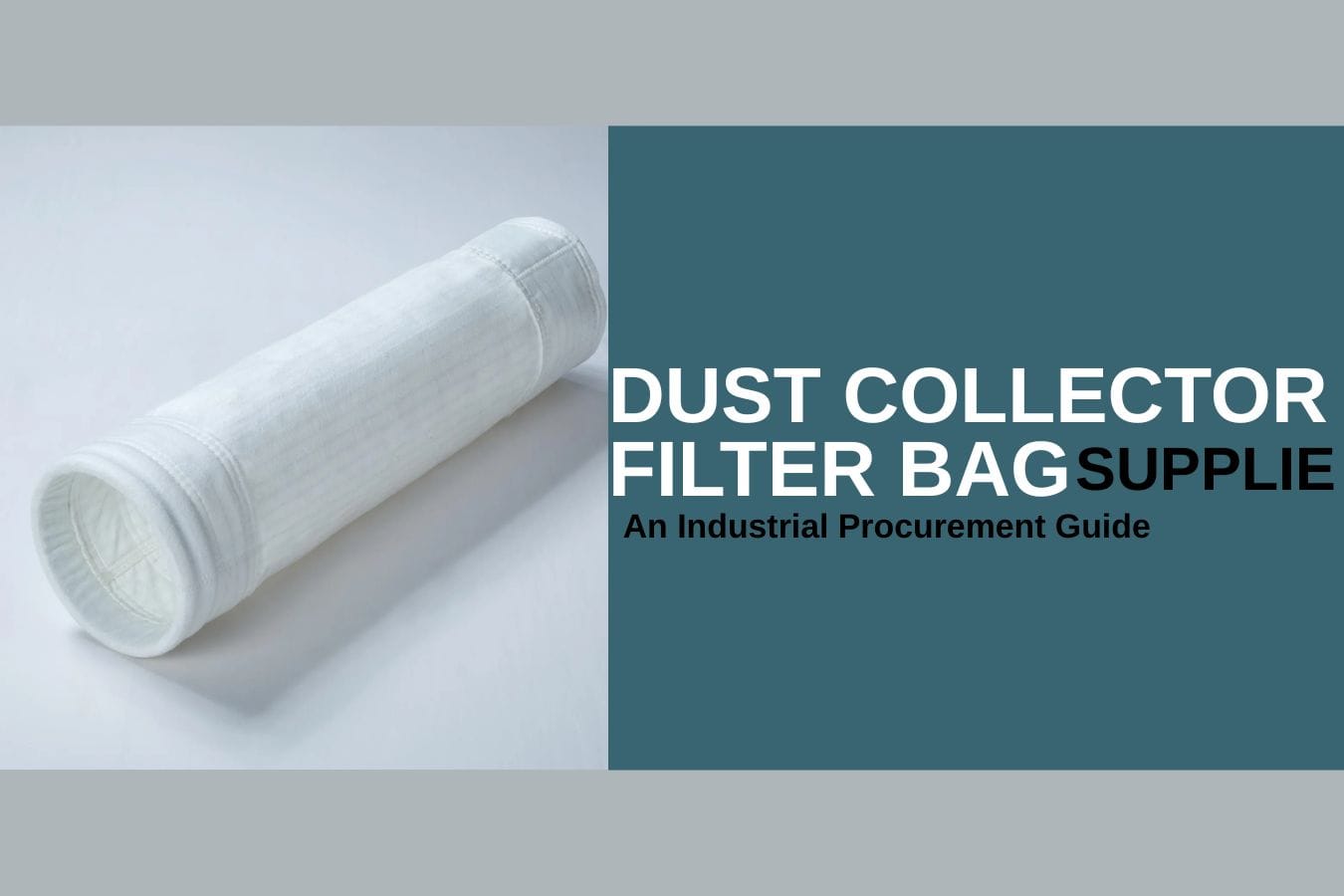
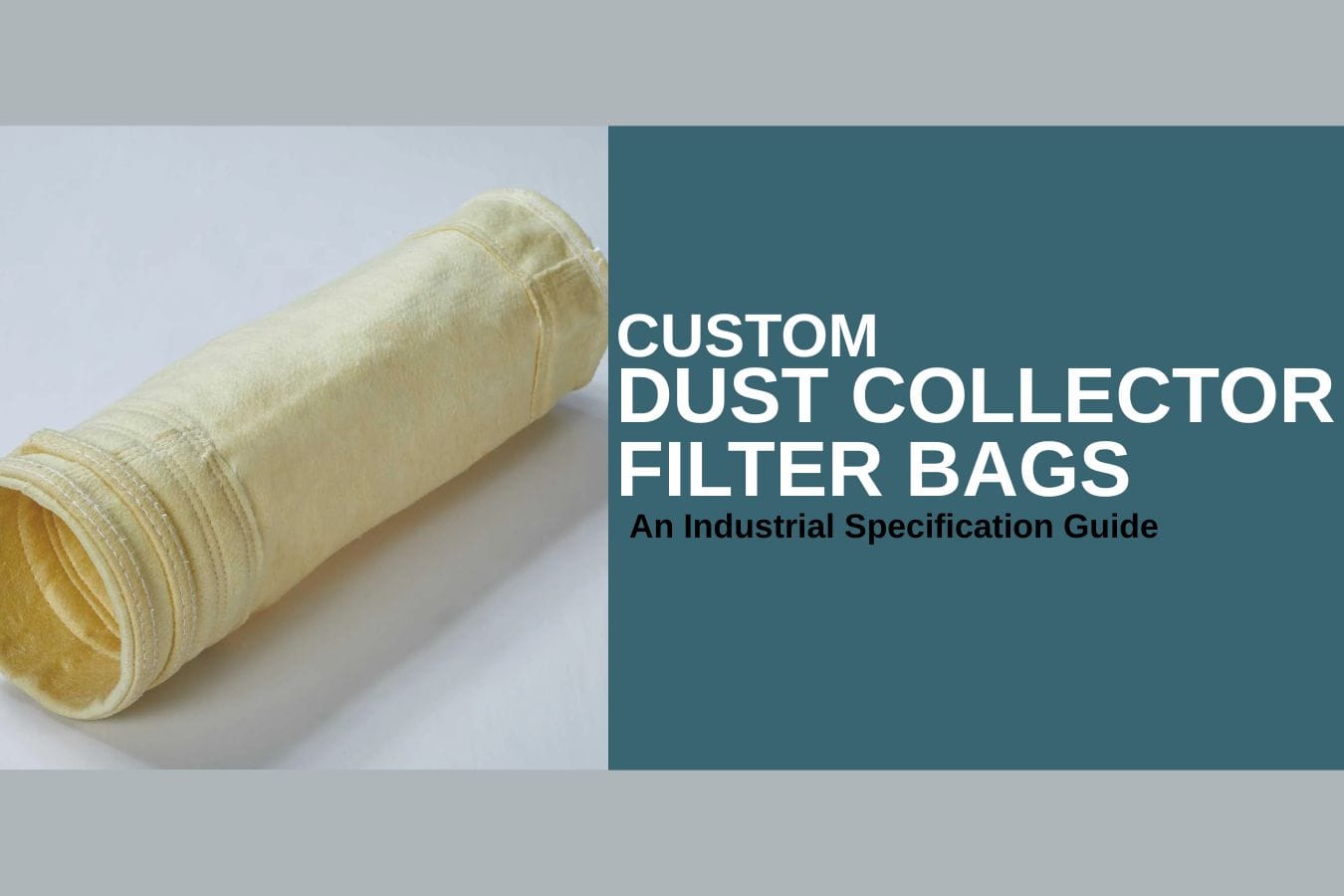
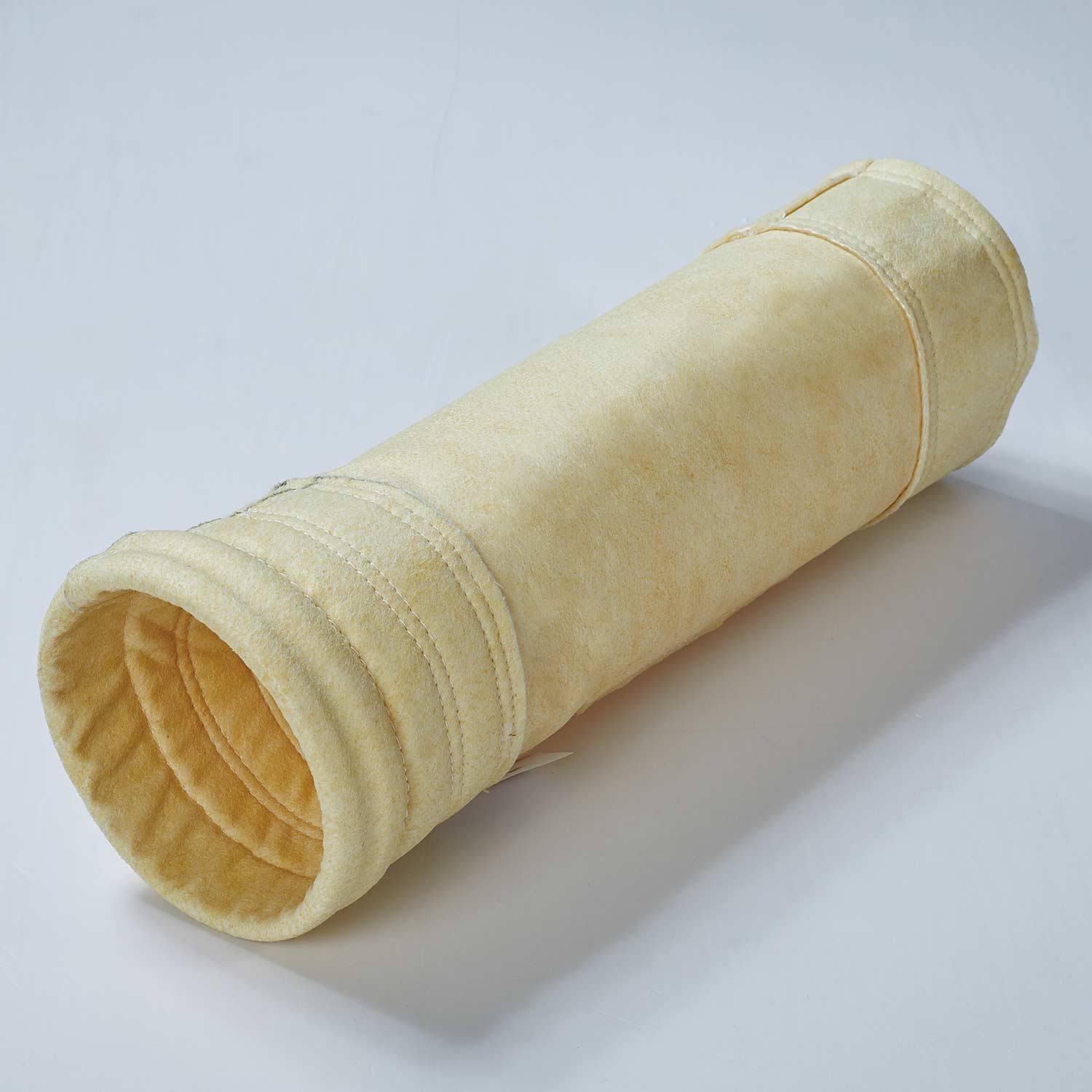
Filter bags aren’t generic socks. Material selection has to match your reality:
- Temperature: room temp vs. mid-temp vs. high-temp flue gas is not a minor detail.
- Dust behavior: abrasive dust (cement, minerals, metal fines) will eat the wrong fabric alive.
- Chemistry: corrosive gases and chemical-heavy environments demand fibers and finishes that won’t degrade.
- Cleaning method: pulse-jet and other cleaning styles stress bags differently; permeability and surface treatment matter.
And if you’ve got combustible dust? Anti-static options aren’t a nice-to-have. They’re part of not ending up on the news.
C. Integration With Grey Whale Solutions (B2B Focus)
- Grey Whale’s Custom Dust Collector Filter Bags
If you’re sourcing custom dust collector filter bags for industrial collectors and you don’t want mystery performance, start with Grey Whale’s core line of dust collector filter bags and match them to temperature and chemistry: - Room temperature Custom Dust Collector Filter Bag
- Medium temperature Custom Dust Collector Filter Bag
- High temperature Custom Dust Collector Filter Bag
- HF-resistant options under Hydrogen fluoride Custom Dust Collector Filter Bag
If you want to browse the whole catalog without playing hide-and-seek, it’s all organized under the main page.
- Industry Benefits for Manufacturers & Distributors
What buyers actually care about (after the first painful failure) is consistency: stable filtration, reasonable service life, and media choices that match the process instead of someone’s “standard spec.” Grey Whale lists a range of bag constructions and media types — for example, anti-static polyester needle felt and acrylic needle felt options that target different dust risks and chemical conditions. - Supported by Custom Dust Collector Filter Cages
Filter bags don’t work alone. Cages (skeletons) keep bags stable, prevent collapse, and help maintain airflow during pulsing — and details like diameter, length, rib count, ring spacing, and optional venturi hardware actually show up in performance. Grey Whale’s cage lineup sits under Custom Dust Collector Filter Cage and includes options like a custom stainless steel dust collector filter cage.
IV. Specialty Filters for High-Risk Industrial Environments
A. Activated Carbon Filters
Activated carbon is what you reach for when the problem isn’t dust — it’s VOCs, odors, and chemical vapors.
You’ll see it in petrochemical settings, labs, wastewater odor control, and anywhere people are tired of “that smell” becoming a complaint, a safety issue, or both. Carbon doesn’t magically fix everything; it adsorbs compounds until it can’t, then it becomes an expensive brick. The trick is knowing what you’re adsorbing and how fast you’re loading the media.
B. Magnetic Filters
Magnetic filters are wonderfully blunt instruments. They pull ferrous particles out of oils, coolants, and hydraulic fluids before those particles chew up pumps and valves.
They’re especially handy in systems where metal fines are common and you want a protective step that doesn’t rely on media loading the same way a traditional filter does. They won’t catch non-ferrous contamination, so don’t pretend they will.
C. Electrostatic Filters
Electrostatic filtration is for ultra-fine particulate — the stuff that slips through coarser stages and still causes real trouble (electronics production, specialty HVAC, controlled spaces).
The upside is strong capture of fine particles without necessarily cranking pressure drop the way dense mechanical media can. The downside? Performance depends on maintenance and operating conditions. Dirty plates, bad cleaning practices, or poor control and the system turns into a very expensive box that “should be working.”
Conclusion: Matching the Right Filter to the Right Application
Filters fail in predictable ways. Wrong media for the chemistry. Wrong temperature rating. Wrong surface treatment for sticky dust. Wrong airflow assumptions. Or the classic: “We sized it for day one, not for six months of reality.”
Matching the right filter to the right application is mostly about being honest about your process conditions — particle size distribution, loading rate, moisture, temperature swings, and what “good enough” actually means for compliance and product quality.
If your biggest headaches are dust collection performance, bag life, and keeping collectors stable under ugly operating conditions, partnering with a specialized filter bag manufacturer like Grey Whale makes sense. Our dust-filtering focus — bags plus cages, organized by temperature and environment — is the kind of product structure that procurement teams and plant engineers can actually use without guessing.
FAQ
What are the main types of industrial filters and how do they differ?
Air filters clean ambient/process air. Liquid filters clean fluids. Dust collectors capture dust at the source. Specialty filters handle fumes (carbon), ferrous debris (magnetic), or ultra-fine particulate (electrostatic).
What is the difference between air filters, dust collectors, and liquid filters?
Air filters usually protect indoor air or sensitive rooms. Dust collectors protect the process by capturing dust at hoods and exhaust points. Liquid filters protect equipment and product by keeping solids out of fluids.
How often should industrial filters be replaced or maintained?
When pressure drop, airflow, or quality metrics say so — not when the calendar says so. Many sites track differential pressure, fan load, emissions/opacity, or downstream contamination to set change-out intervals.
What type of filter works best in high-temperature applications?
For air and gas streams, you’re typically looking at media designed for higher temps (and sometimes aggressive chemistry), not standard “room temp” fabrics. In dust collection, high-temp bag media is its own category for a reason.
How do filter cages improve the performance of dust collector filter bags?
Cages keep bags from collapsing, reduce abrasion from movement, and help bags pulse-clean evenly. Grey Whale’s cage specs (diameter, length, rib count, ring pitch, venturi options) hint at how much design detail sits behind a part people love to treat as generic.